


Client
Gemeinde Gießhübl
Architecture
F+P ARCHITEKTEN ZT GMBH
Gross Floor Area: approx. 1,860 m²
Net Usable Area: approx. 1,650 m²
Completion: 08/2024
Heide-Kindergarden, Gießhübl
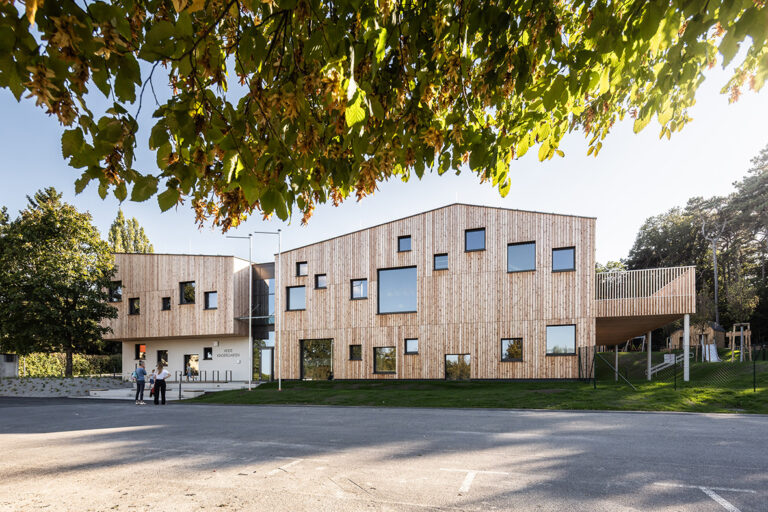
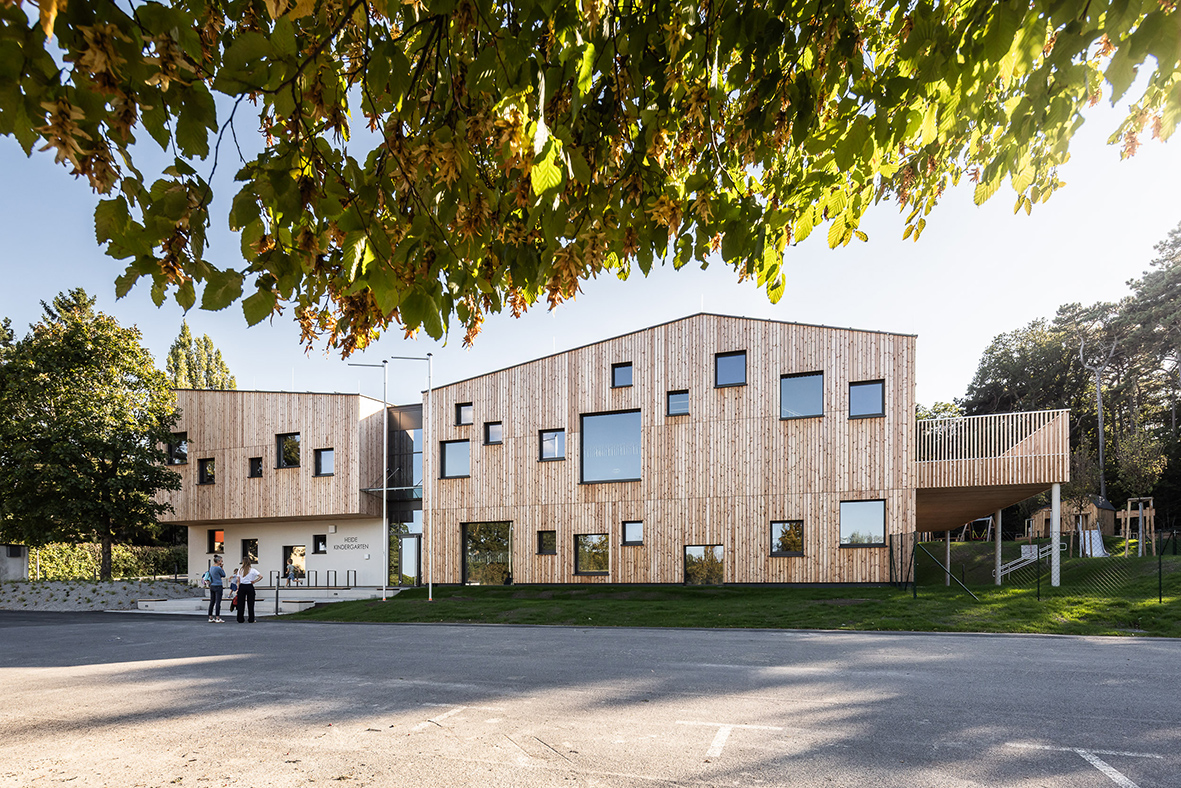
The new Heide Kindergarten in Gießhübl stands out for its innovative architecture, child-oriented spatial concept and high energy efficiency.
2372
Gießhübl,
Eichbergstraße 2,
Austria
The project, located on the site of the former “Bärenhütte,” was awarded to our timber construction design following a two-stage, EU-wide architectural competition.
The Heide Kindergarten in Gießhübl represents innovative architecture, sustainable energy performance and a child-centred spatial concept. It demonstrates how ecological construction, climate-friendly building technology and high pedagogical quality can be successfully integrated.
Generous, Welcoming Spaces
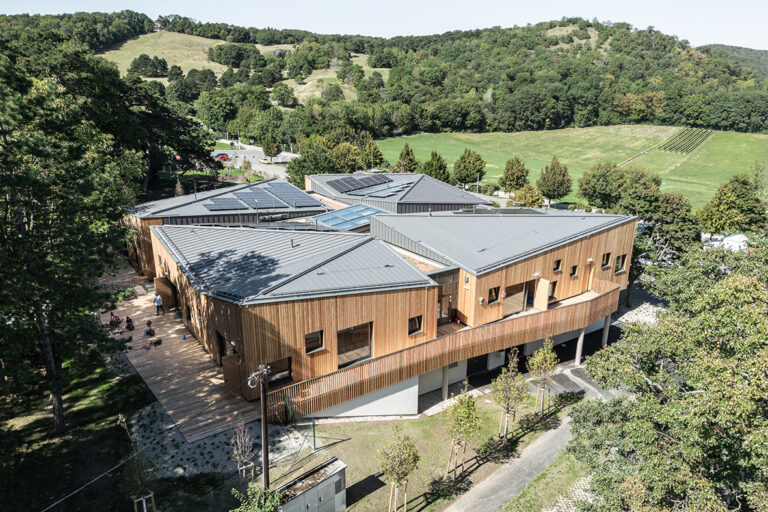
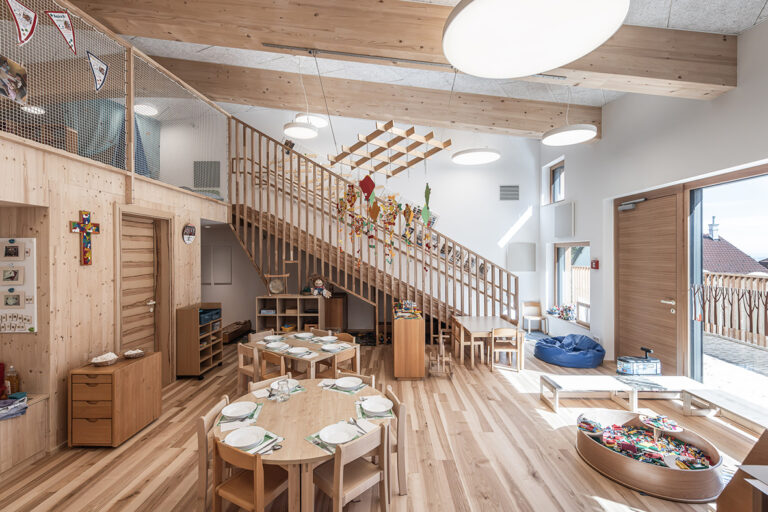
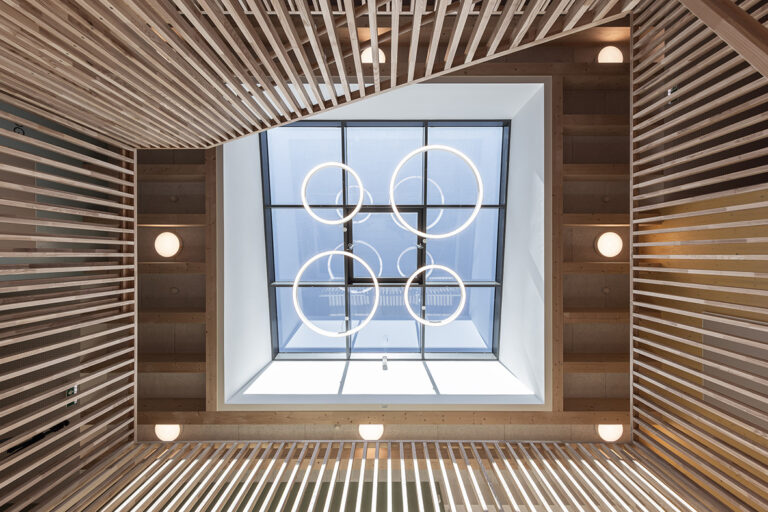
The site accommodates a new two-storey building for eight kindergarten groups. The building volume is divided into four equally sized “houses” that are arranged in a staggered configuration. At the heart of the building is a light-filled atrium featuring a timber staircase and tiered seating. A carefully chosen colour concept and large glazed areas create a friendly and open atmosphere. From the atrium, circulation routes extend like open arms to the individual kindergarten groups.
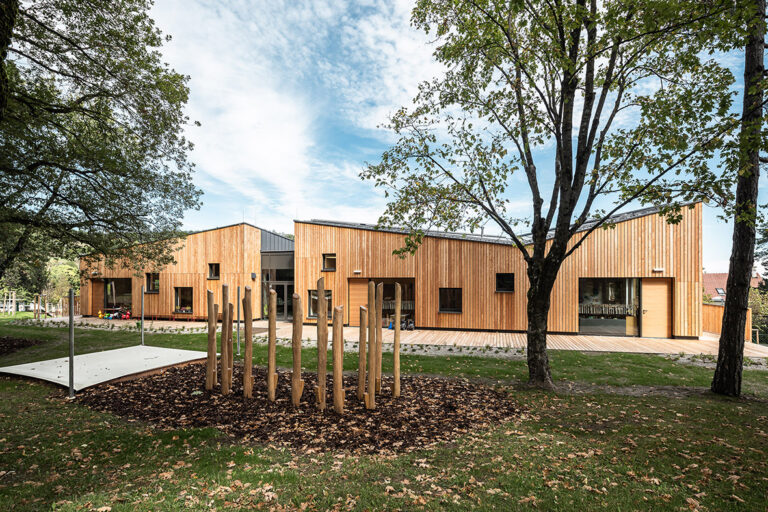
Outdoor Space and Connection to Nature
The location at the edge of the forest enabled the development of a nature-oriented concept. Outdoor areas, play zones and green spaces invite exploration, while a surrounding timber terrace provides additional space for activities. Raised garden beds allow children, supported by educators, to grow fruit and vegetables and experience nature directly.
Architectural Sustainability & Ecology
The new building combines a solid base with an upper floor constructed in timber. This reduces the overall building mass and significantly lowers primary energy demand and CO₂ emissions. Through optimized material selection, the building achieves an OI3 performance approximately 30% better than a conventional solid construction (assessment of the ecological quality of all materials based on environmental indicators).
Energy is supplied by a ground-source (brine/water) heat pump system with borehole field and free cooling. Heating and cooling energy is generated entirely from renewable sources. Electricity supply is complemented by a photovoltaic system with a peak capacity of approximately 37 kWp, generating around 36,000 kWh annually and covering more than 50% of the kindergarten’s total energy demand.
An intelligent night-time ventilation concept, highly efficient LED lighting with daylight control, and zoned ventilation systems with CO₂ sensors ensure maximum comfort with minimal energy consumption. The roof surfaces are optimally oriented for photovoltaic modules and make a significant contribution to the building’s energy self-sufficiency.