


Client
Wiener Gesundheitsverbund, Stadt Wien
General planning
F+P ARCHITEKTEN ZT GMBH
Architecture
AHA – Austrian Healthcare Architects:
F+P ARCHITEKTEN ZT GMBH
Architects Collective ZT GMBH
SWAP Architekten ZT GMBH
Usable floor area: ca. 1.830 m²
Gross floor area: ca. 5.300 m²
Finalization: Nov. 2025
Favoriten Clinic: New Building Project 3 – New Pavilion G1
1100
Vienna,
Kundratstraße 3,
Austria
As part of a comprehensive investment program of the Vienna Health Network, Klinik Favoriten is being modernized through 2034.
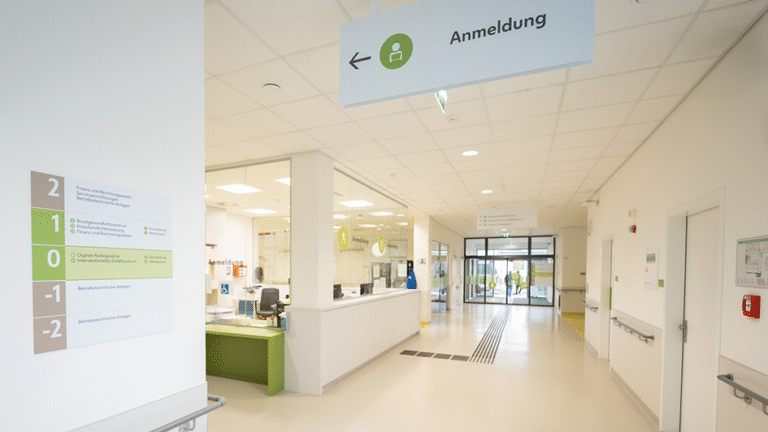
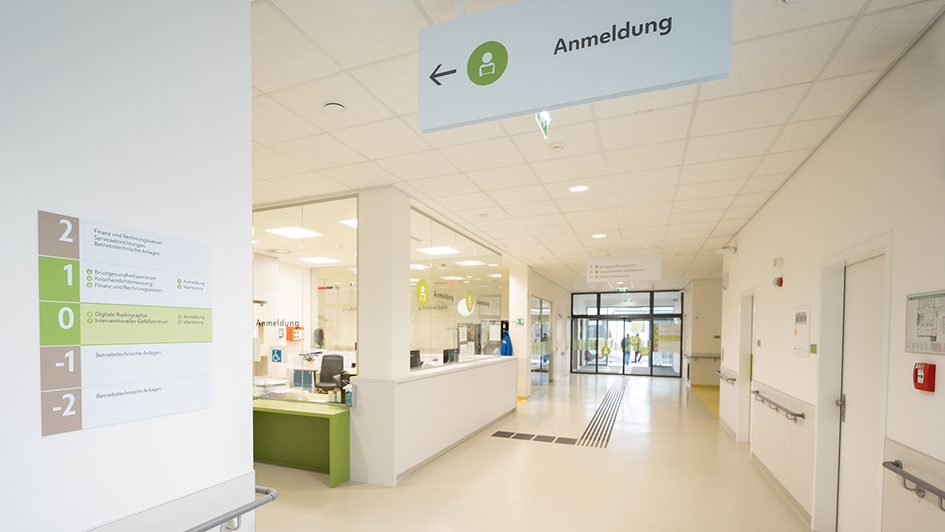
In the course of restructuring and expanding the hospital complex, a new building was constructed at the center of the hospital site (Construction Area 3). In the coming years, this building will accommodate the Radiology Department, the Breast Health Center, the Interventional Vascular Center, and administrative offices.
Smooth Operations Through Multiple Construction Phases
Construction Area 3, including the new Pavilion G1, extends from Kundratstraße to the existing Pavilion 4 (Sectional Imaging Center) and Pavilion Z (Mother and Child Center). Due to the limited space available and the fact that the surrounding pavilions remained in operation, the project was divided into two construction phases. The construction site for the first phase comprised the area of the current Pavilions E and F, the entrance pavilion, and Pavilion P2. In order to clear these areas for the future central building, the original Pavilion G1 was replaced by this new structure.
Modernization While Operations Continue
The temporary replacement building was designed as a new five-storey structure. In addition to 31 office workstations for the finance department, the building served as an interim solution for the Radiology Department, the Breast Health Center, and the Interventional Vascular Center until completion of the central building. Construction and modernization took place while the hospital remained fully operational. Careful planning ensured uninterrupted hospital operations, and patient care continued to be provided at the usual high standard throughout the entire construction period.
The Next Economically Sensible Step
Even after the interim phase and the relocation of departments to the new central building, the spaces within the replacement building continued to be used as part of hospital operations, with research and administrative functions being newly located there. The building therefore remains in purposeful use and forms a valuable component of the overall hospital complex.


